Water Testing & Balancing
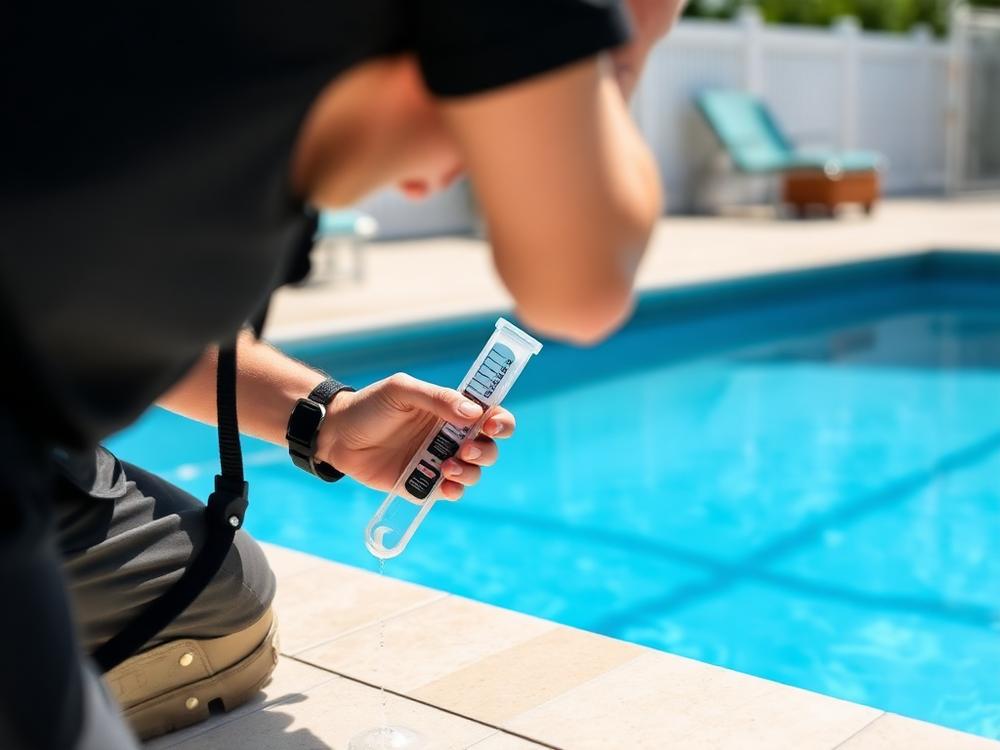
Chlorine, pH, alkalinity, stabilizer, and salt tested and corrected with documented readings.
Learn more →Palm Beach County, FL
A saltwater pool still needs chlorine — it just makes its own, and only when the salt level, water balance and cell condition all cooperate. Most of the saltwater problems we see in Palm Beach County are not broken systems at all: salt has drifted low after a rainy stretch, stabilizer has burned off, pH has climbed the way it always does on a chlorine generator, or the cell plates are crusted with scale and quietly producing far less than the display suggests. Our saltwater maintenance visits test salt alongside the rest of the chemistry, keep the balance in the range salt equipment is designed for, inspect and clean the cell when it warrants it, and note early signs of scale or corrosion on the pad and fittings.
Do You Need This?
What's Included
Our Process
Salt is one number among several. We test chlorine, pH, alkalinity, stabilizer and hardness at the same time, because a generator that appears weak is usually being held back by balance rather than by salt alone.
Chlorine generators push pH up as a byproduct, and high pH plus high hardness is what puts scale on cell plates. We correct toward the range the equipment expects instead of chasing one reading at a time.
We look at the plates when access allows. If there is visible scale, the cell is cleaned with a surface-appropriate method. If it looks worn, damaged or electrically faulty, we tell you and recommend a licensed equipment specialist rather than working on it ourselves.
Skimming, brushing, baskets and a filter pressure check finish the visit, followed by written readings so you can see whether salt and chemistry are steady or drifting.
Why It Matters
Local Conditions
Two Palm Beach County realities hit saltwater pools harder than average. The first is rain: a wet summer week can dilute a pool enough to drop the salt reading below the generator's working threshold, so output falls right when warm water needs it most. The second is water hardness combined with the pH climb every generator causes — that pairing lays scale on cell plates and along the tile line faster than in cooler, softer-water regions. On coastal properties, airborne salt adds to the corrosion load on rails, screws and pad hardware, which is why we look at metal, not just water.
Scope
Questions
Yes. A salt system generates chlorine, but it does not skim leaves, brush the walls, empty baskets, or correct pH and alkalinity. In warm Palm Beach County water those drift quickly, and drifting balance is what shortens cell life.
Only when it needs it. We inspect the plates during service and clean when visible scale has built up. Cleaning a cell that does not need it wears the coating for no benefit, so we go by what is actually on the plates.
Rain and overflow dilute the pool. The salt has not disappeared, it is simply spread through more water, so the reading falls. That is why we test salt on every visit rather than assuming last month's number still holds.
No. Our work is maintenance: testing, balancing, inspection and cleaning. If the cell or controller is failing, we will tell you what we observed and recommend a licensed equipment specialist for the repair or replacement.
Coverage
Chlorine, pH, alkalinity, stabilizer, and salt tested and corrected with documented readings.
Learn more →A set service day for skimming, brushing, baskets, filter checks, testing, and balancing.
Learn more →Cartridge, DE, and sand filter cleaning to restore flow and fix stubborn cloudiness.
Learn more →Next Step
Send the details and we will follow up to arrange a look at the property and give you a personalized price.